Table Of Content
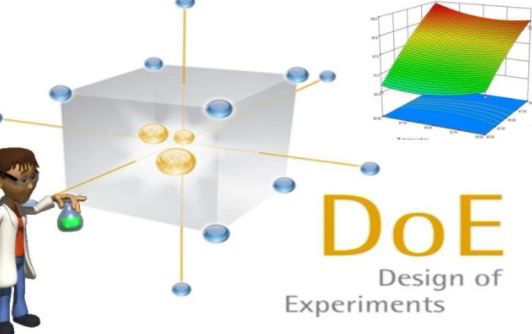
Experimental design or Design of Experiments can be used during a New Product / Process Introduction (NPI) project or during a Kaizen or process improvement exercise. DOE is generally used in two different stages of process improvement projects. Learn about quantitative and qualitative variables and explore different graph... While the challenges of implementing DoE are non-trivial, they can be effectively managed with meticulous planning, ethical consideration, and adherence to scientific principles. RBD finds its use in clinical trials where patients could be blocked by age groups or disease severity before randomizing the treatment drugs to minimize variability due to these factors. Based on the results, you can recommend further steps of applying the results for process improvement, commercial release of the product, or quality enhancement.
Apply Full Factorial DOE on the same example
It is a commitment to integrity, ensuring that the methods employed are both scientifically valid and morally sound, respecting the dignity of all participants and the sanctity of the natural world being studied. Truth in measurement is the cornerstone, demanding accuracy and reliability in data collection and analysis. This principle challenges researchers to maintain rigor in their methods, ensuring that the insights gleaned reflect reality, untainted by bias or error. Standard DoE processes are often structured around seven or fewer steps. The steps in experimental design will take you through the process of determining what is the best response that you could use in your study, workplace, or procedures. DoE is used especially in drugs that are best delivered via a time-release schedule,.

SafetyCulture (formerly iAuditor) for Experimental Design
You probably follow a recipe so there are many additional factors that control the ingredients - i.e., a mixture. What parts of the recipe did they vary to make the recipe a success? Probably many factors, temperature and moisture, various ratios of ingredients, and presence or absence of many additives. Now, should one keep all the factors involved in the experiment at a constant level and just vary one to see what would happen? Instead of concepts like power and aliasing, which are relevant to determining which effects are real, RSM uses concepts relating to the errors when making predictions in the relevant design space.
DOE lets you investigate specific outcomes.
How Design of Experiments enriches life sciences' findings - pharmaphorum
How Design of Experiments enriches life sciences' findings.
Posted: Fri, 20 Jan 2023 08:00:00 GMT [source]
After analyzing all of your main effects and interactions, you will be able to determine what your settings should be for your factors or variables. Only when this is done is it possible to certify with high probability that the reason for the differences in the outcome variables are caused by the different conditions. Therefore, researchers should choose the experimental design over other design types whenever possible.
Identify the main effects of your factors
Another way is to reduce the size or the length of the confidence interval is to reduce the error variance - which brings us to blocking. Then measure your chosen response variable at several (at least two) settings of the factor under study. If changing the factor causes the phenomenon to change, then you conclude that there is indeed a cause-and-effect relationship at work. Ultimately, assessing a particular fractional factorial is about deciding whether you can determine any of the particular higher order effects that you think might be interesting. Design of Experiments (DOE) offers a daunting compilation of types of design.
How design of experiments lowers costs in R&D - Scientific Computing World
How design of experiments lowers costs in R&D.
Posted: Wed, 29 Mar 2023 11:18:22 GMT [source]
Discover the significance of effect size for chi square in data science, understand standard measures like Cramer’s V and Phi coefficient, and learn how to calculate them. Learn about goodness-of-fit, its importance in assessing statistical models, various tests, and how to apply them for accurate predictions and inferences. A notable application of Design of Experiments (DoE) can be traced to the automotive industry, which was employed to enhance the manufacturing process of vehicle components. One particular challenge was the excessive variability in the strength of welded joints, which was critical to ensuring the safety and durability of vehicles. Explore Failure Mode and Effects Analysis with our easy-to-understand guide.
These factors can be identified by the project team in a brainstorming session. In ordinary circumstances, where time and budget are finite, the team should limit the experiment to six or seven key factors. These factors are controlled by setting them at different levels for each run. Fractional Factorial Design reduces the number of experimental runs required by selecting a subset of the complete factorial design. This approach is optimal for initial exploratory studies where the goal is to identify the most significant factors with a limited budget or time frame. Design of Experiments (DOE) is a systematic method used in applied statistics to evaluate the many possible alternatives in one or more design variables.
The prerequisite for this course is STAT Regression Methods and STAT Analysis of Variance. However, the focus of the course is on the design and not on the analysis. Remember to let your DOE campaign stage guide your design choices. It can also be helpful to think about how much work you can actually do—and find a design that fits your budget. Typically, if you have an unmanageable number of runs, you’ve likely picked the wrong design. It’s easy to get overwhelmed by all the design choices that most DOE software gives you.
They enlisted the company’s Master Black Belt to help them do the experiment using a two-level approach. A unique application of DOE in marketing is called conjoint analysis. A web-based company wanted to design its website to increase traffic and online sales.
DOE allows researchers to investigate the effect of changing multiple factors simultaneously. In the Design of Experiments (DoE), selecting the right software tools is pivotal for ensuring precision, efficiency, and aesthetic clarity of data analysis. This section reviews notable statistical software packages that support DoE, highlighting features that enhance the research process from design to data visualization. Completely Randomized Design (CRD) is the simplest form of experimental design, where treatments are randomly assigned to experimental units.
As when it comes to fitting a model to your data, if your DOE has a really low resolution, you won’t be able to tell the difference between effect a) and effect b). Whereas if you have a “high resolution”, distinguishing between one effect and another is easy. In short, resolution is all about assessing your design by how well you can tell different effects apart.
The independent variable of a study often has many levels or different groups. Thus, when everything else except for one intervention is held constant, researchers can certify with some certainty that this one element is what caused the observed change. This is sometimes solved using two different experimental groups. Changing one factor at a time (OFAT, left) means effects are easy to distinguish but there is less information on how factors interact, a critical feature of complex systems. Using statistical techniques to design experiments that explore combinations of factor settings allows their effects to be understood in combination (DOE, right).